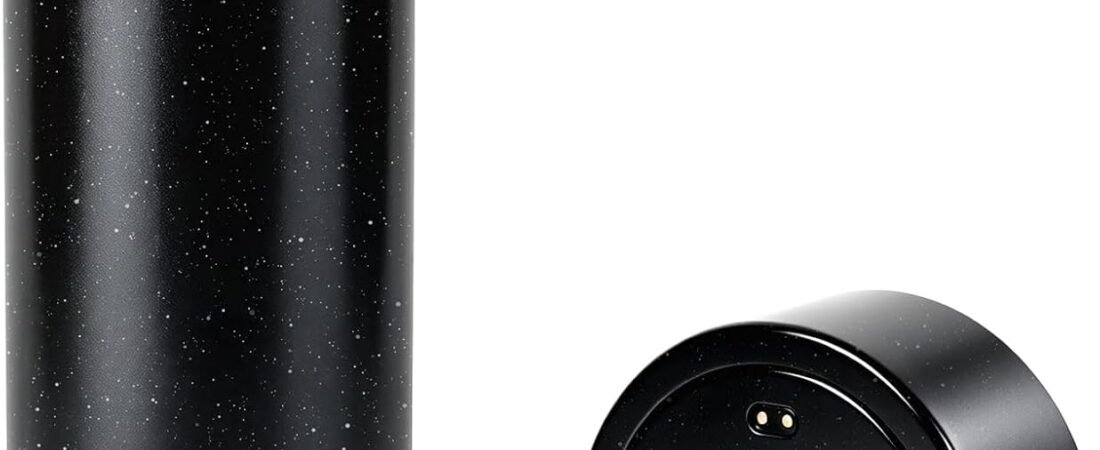
A water bottle is one of those everyday items that seems simple until you start thinking about how often it is carried, where it is stored, and how easily it can be misplaced or accessed by someone else. For commuting, travel, outdoor activities, school, work, or fitness, a bottle needs to be convenient to carry while also keeping its contents protected.
The 450ml Smart Water Bottle with Fingerprint Lock takes a more technology-focused approach to the traditional reusable bottle. Designed with a stainless steel body, fingerprint access, magnetic charging, and a leak-resistant design, it combines beverage storage with electronic security features.
The fingerprint-lock concept is particularly different from an ordinary screw-top bottle. Rather than relying exclusively on a conventional cap, the electronic locking system is intended to restrict access to the bottle. This can be useful in situations where a bottle is left temporarily unattended, although users should understand that an electronic lock is not the same thing as a high-security container.
The 450ml capacity also places the bottle in a relatively compact category. It is suitable for situations where portability is more important than carrying a large amount of liquid in one container. A smaller bottle can fit more easily into a backpack, handbag, vehicle storage area, desk setup, or travel bag.
This guide looks at how a smart fingerprint water bottle works, its main features, practical ways to use it, the differences between smart and conventional bottles, and the considerations that matter when choosing an electronically secured bottle for everyday use.
What Is a Smart Water Bottle With a Fingerprint Lock?
A smart water bottle is a reusable bottle that incorporates electronic functions into the traditional drinking-container design.
The model discussed here combines several elements:
- Approximately 450ml capacity
- Stainless steel construction
- Fingerprint-based locking
- Magnetic charging
- Leak-resistant design
- Tamper-resistant access concept
- Suitability for hot and cold beverages
- Compact format for travel and outdoor use
The main difference between this type of bottle and a conventional reusable water bottle is the electronic locking mechanism.
Instead of simply opening the lid by turning or lifting it, the fingerprint system is intended to provide controlled access. A registered fingerprint can be used to unlock the bottle, depending on the device’s configuration and operating condition.
The bottle’s physical construction also plays an important role. Stainless steel is commonly used in reusable drinkware because it can provide durability while being relatively easy to clean.
The combination of physical construction and electronic functionality makes this type of bottle interesting for people who want something more specialized than a standard water container.
Key Features of the 450ml Smart Water Bottle
1. Fingerprint Locking System
The fingerprint lock is the feature that most clearly separates this bottle from conventional drinkware.
Instead of depending only on a physical cap, the bottle incorporates biometric access.
The concept is similar to fingerprint access on a smartphone. A user’s registered fingerprint is recognized by the sensor, allowing the locking mechanism to respond accordingly.
This can be useful when the bottle is stored in a shared environment.
For example, a person might leave the bottle:
- On an office desk
- Inside a gym bag
- At a campsite
- In a vehicle
- In a classroom
- In a shared workspace
- In a travel bag
The locking system can make casual access less convenient for someone who is not authorized to open it.
However, users should keep expectations realistic. A fingerprint water bottle is primarily designed as a personal-access convenience feature. It should not be treated as a tamper-proof security container for valuables, hazardous materials, or sensitive substances.
2. Stainless Steel Construction
The bottle uses stainless steel for its main body.
Stainless steel is a common choice for reusable bottles because it provides a durable alternative to many lightweight plastic designs.
It can also be suitable for both cold and warm beverages when the particular bottle is designed for those uses.
The black finish gives the bottle a relatively understated appearance, making it suitable for different environments.
As with any reusable bottle, users should follow the manufacturer’s instructions regarding temperature limits, cleaning, and storage.
3. 450ml Capacity
The 450ml capacity provides a balance between portability and beverage volume.
A 450ml bottle is smaller than many large sports or hiking bottles, but that can be an advantage when space is limited.
It can fit conveniently into:
- Small backpacks
- Work bags
- Handbags
- Vehicle cup holders, where dimensions are compatible
- Gym bags
- Travel luggage
- Desk spaces
The tradeoff is straightforward: a smaller capacity means the bottle may need to be refilled more frequently during extended activities.
For a short commute or several hours at a desk, the capacity may be convenient. For a long hike or extended outdoor activity, users may need additional water.
4. Magnetic Charging
The electronic locking system requires power, and the bottle is designed with magnetic charging.
A magnetic charging connection can make it easier to connect the charging cable or accessory without having to manipulate a conventional port in the same way.
Because the bottle contains electronics, charging should be performed according to the manufacturer’s instructions.
The charging area should also be kept appropriately protected from water and moisture during charging.
Users should never assume that a bottle being leak-proof means it is safe to charge while wet or submerged.
5. Leak-Resistant Design
A water bottle carried in a backpack or travel bag needs protection against accidental spills.
The product is designed with a leak-proof or leak-resistant structure intended to help prevent liquid from escaping during normal use.
This feature is particularly relevant when the bottle is carried alongside:
- Phones
- Laptops
- Documents
- Clothing
- Books
- Camera equipment
- Other electronics
Nevertheless, leak resistance depends on proper assembly and condition.
A cap that is not correctly secured, a damaged seal, or improper maintenance can affect performance.
It is sensible to check the bottle after cleaning or reassembly before placing it inside a bag containing electronics or important documents.
6. Tamper-Resistant Access
The product description emphasizes tamper-proof functionality.
In practical terms, the electronic locking system is intended to make unauthorized opening more difficult.
This can provide a degree of personal control over the contents.
However, “tamper-proof” should not be interpreted as an absolute security guarantee.
No consumer bottle should be assumed to be impossible to open, damage, or interfere with under all circumstances.
The most appropriate way to view this feature is as an additional barrier against casual or unauthorized access.
How the Fingerprint System Can Be Used
The electronic lock is only useful if it is properly configured.
Initial Setup
Before relying on the fingerprint function, users should follow the manufacturer’s setup instructions.
The general process may involve:
- Charging the bottle.
- Activating the electronic system.
- Registering one or more authorized fingerprints.
- Testing the unlocking mechanism.
- Confirming that the lid operates correctly.
- Learning how the bottle indicates its locking status.
The exact procedure can vary depending on the product’s firmware and design.
It is a good idea to complete the setup at home rather than attempting it for the first time during a trip.
Registering a Fingerprint
Fingerprint sensors can behave differently depending on finger position, moisture, cleanliness, and other environmental factors.
When setting up the bottle, the user should follow the manufacturer’s recommended procedure.
It can also be useful to understand whether the bottle allows multiple fingerprints or whether it is intended primarily for a single user.
If multiple people need legitimate access, the available registration options should be checked before purchase or setup.
Testing Before Leaving Home
A simple test can prevent inconvenience later.
After registering a fingerprint, lock and unlock the bottle several times.
Make sure the mechanism responds consistently.
If the electronic system does not recognize the fingerprint reliably at home, it should not be assumed that it will perform perfectly in cold weather, while hiking, or when the user’s hands are wet.
How It Can Be Used in Everyday Life
At Work
An electronically secured water bottle can be convenient in an office or shared workspace.
A bottle may remain on a desk for hours while the owner attends meetings or moves around the building.
The fingerprint system can add a personal-access feature that a conventional bottle does not provide.
It is still advisable to avoid leaving a bottle containing beverages unattended for long periods in inappropriate temperatures.
At the Gym
A compact 450ml bottle can fit into a gym bag without taking up as much space as larger containers.
The locking mechanism can also be useful when the bag or bottle is stored in a shared environment.
Users should remember that the bottle is still a drink container rather than a replacement for a secure locker.
During Travel
Travel is another potential use.
The bottle’s compact size can make it convenient to carry during:
- Train journeys
- Road trips
- Airport transfers
- Hotel stays
- Sightseeing
- Daily commuting
When traveling, users should also consider airport security requirements concerning liquids. A smart locking mechanism does not change the rules governing liquids in carry-on baggage.
Outdoor Activities
The bottle can be used for outdoor activities such as walking, hiking, camping, or sightseeing.
Its stainless steel construction and compact capacity can make it practical when portability is a priority.
For longer outdoor activities, however, 450ml may not be sufficient as the only water source.
A larger bottle, hydration reservoir, or additional water supply may be necessary depending on the duration and conditions.
In a Vehicle
A compact bottle can be useful for commuters and drivers.
The 450ml capacity is suitable for shorter journeys, while the stainless steel construction provides a reusable alternative to disposable drink containers.
Users should make sure the bottle is positioned securely so it cannot interfere with driving controls.
At School or University
Students may use a smaller bottle for carrying water between classes.
The fingerprint feature can provide an added level of personal access control in environments where belongings may be left unattended.
As always, the bottle should be used according to the school’s policies and the manufacturer’s instructions.
Using the Bottle for Hot and Cold Drinks
The product is described as being suitable for both hot and cold beverages.
This expands its usefulness beyond plain cold water.
Potential uses can include:
- Cold water
- Chilled beverages
- Warm water
- Tea or other suitable warm drinks
However, users should pay close attention to the manufacturer’s temperature guidance.
A bottle designed for hot beverages is not necessarily a vacuum thermos capable of maintaining a particular temperature for many hours.
The external surface can also become warm when hot liquids are placed inside, depending on the construction.
Be Careful With Hot Liquids
Hot liquids require additional caution regardless of the bottle design.
Before carrying a hot drink, make sure the lid is properly secured and understand how the bottle releases pressure, if applicable.
Avoid filling the bottle beyond the recommended level.
When drinking a hot beverage, check the temperature before taking a large sip.
A fingerprint lock provides access control; it does not eliminate the ordinary risks associated with hot liquids.
Who May Find This Type of Bottle Useful?
Travelers
Travelers who want a compact reusable bottle with an additional electronic feature may find this type of design interesting.
The 450ml capacity is relatively easy to carry, while the fingerprint system adds a distinctive access-control function.
Office Workers
People who regularly leave their bottle on a desk or in a shared workspace may appreciate the added access restriction.
Gym Users
The compact design can work well for shorter training sessions, particularly when the user does not want to carry a large bottle.
Students
A 450ml bottle can fit easily into many backpacks and provide a personal reusable drinking container.
Outdoor Enthusiasts
Hikers, campers, walkers, and travelers may appreciate the stainless steel body and portable size.
For longer activities, however, additional water capacity may be necessary.
Technology Enthusiasts
People who enjoy incorporating technology into ordinary household items may appreciate the combination of biometric access and reusable drinkware.
The fingerprint system gives the bottle a different purpose beyond simply holding liquid.
Important Things to Consider
1. Fingerprint Recognition Is Not Infallible
Biometric sensors can sometimes fail to recognize a fingerprint.
Factors that may affect recognition include:
- Wet fingers
- Dirty fingers
- Extremely dry skin
- Incorrect finger placement
- Sensor contamination
- Low battery
- Environmental conditions
For this reason, users should understand the available backup access procedure, if one exists.
A smart bottle should not be used in a situation where failure of the electronic lock would create a serious problem.
2. Battery Management Is Important
Unlike a traditional bottle, an electronic locking bottle depends on a rechargeable power source.
If the battery becomes depleted, electronic functions may not operate normally.
Before travel or outdoor activities, users should check the charge level.
The magnetic charging system should be used according to the manufacturer’s instructions.
3. Electronics and Water Require Care
The bottle is designed to hold liquids, but that does not mean every electronic component is waterproof.
The drinking container and electronic system have different requirements.
Avoid exposing the charging connection or electronic components to unnecessary moisture.
Do not charge the bottle while the charging area is wet.
4. Leak Resistance Depends on Proper Assembly
A leak-proof design can only perform properly if the lid, seals, and other components are correctly installed.
After cleaning, make sure all parts are properly reassembled.
Before placing the bottle into a bag containing valuable electronics, it can be sensible to perform a basic leak check.
5. 450ml Is a Moderate Capacity
The compact size is convenient, but it also means limited liquid capacity.
For a short trip, office session, or gym workout, 450ml may be sufficient for some people.
For a long hike or hot outdoor day, users may need to refill frequently or carry another water source.
Capacity should therefore be considered in relation to the intended activity.
6. It Is Not a High-Security Container
The fingerprint lock can restrict casual access, but the bottle should not be treated as a secure vault.
If a substance needs genuine security or controlled storage, a purpose-built container should be used instead.
The smart-lock feature is primarily a convenience and personal-access feature.
7. Cleaning Needs Attention
Reusable bottles should be cleaned regularly.
The interior should be washed according to the manufacturer’s recommendations, especially after using beverages other than water.
Electronic components should not be exposed to excessive water.
Users should carefully follow instructions concerning whether the lid, sensor area, or other components can be submerged.
8. Hot Beverage Compatibility Should Be Verified
Although the product is described as suitable for hot and cold drinks, users should check the manufacturer’s temperature limits.
Not every stainless steel bottle provides the same insulation or heat-retention characteristics.
If maintaining a beverage at a particular temperature for many hours is important, the product’s thermal specifications should be examined rather than assumed.
Smart Water Bottle vs. Traditional Stainless Steel Bottle
The main difference is the addition of electronics.
| Feature | Traditional Stainless Steel Bottle | Smart Fingerprint Bottle |
|---|---|---|
| Stainless steel construction | Common | Yes |
| Reusable | Yes | Yes |
| Fingerprint access | No | Yes |
| Electronic components | No | Yes |
| Charging required | No | Yes |
| Personal access control | Basic physical lid | Electronic locking system |
| Maintenance | Relatively simple | Includes electronic care |
| Portability | Varies | Compact 450ml format |
A conventional stainless steel bottle is simpler and does not depend on a battery.
The smart model adds biometric access but requires more attention to charging and electronics.
Smart Bottle vs. Large Sports Bottle
Large sports bottles are generally designed around capacity.
A 750ml, 1-liter, or larger bottle may be more appropriate for extended workouts or outdoor activities.
The 450ml smart bottle takes the opposite approach by emphasizing portability and additional functionality.
A person who spends several hours outdoors may prefer greater capacity, while someone commuting to an office may prioritize a smaller footprint.
Smart Bottle vs. Insulated Thermos
An insulated thermos focuses primarily on temperature retention.
A smart fingerprint bottle focuses more on electronic access control and portability.
These are different priorities.
Someone who wants to keep a drink hot for a long period should examine insulation and temperature-retention specifications.
Someone interested in personal access control may care more about the fingerprint system.
Creating a Practical Daily Hydration Routine
A smart water bottle can become part of a daily routine, but the technology itself does not determine how much fluid someone needs.
Fluid requirements vary between individuals and can be influenced by activity, environmental temperature, diet, and other factors.
A practical routine can include carrying the bottle during normal activities and refilling it when necessary.
For people who use the bottle during exercise or outdoor activities, carrying additional water can be sensible when the 450ml capacity is not enough for the planned duration.
The bottle should be viewed as a convenient container rather than a device that determines personal hydration requirements.
Caring for the Fingerprint Sensor
The fingerprint sensor is an important component of the bottle.
Keeping it clean can help maintain reliable operation.
If fingerprints, dust, beverage residue, or moisture accumulate around the sensor, recognition may become less consistent.
Use only the cleaning methods recommended by the manufacturer.
Avoid abrasive materials or harsh chemicals unless specifically approved.
The same principle applies to the charging connection.
A clean, dry connection area can help reduce unnecessary charging problems.
What to Do Before Traveling With the Bottle
A short preparation checklist can be useful.
Check the Battery
Charge the bottle before departure if needed.
Test the Fingerprint
Lock and unlock the bottle several times.
Inspect the Seal
Make sure the lid and seals are correctly positioned.
Check for Leaks
If the bottle has been recently cleaned or reassembled, confirm that it closes correctly before putting it inside luggage.
Understand Liquid Restrictions
If traveling by air, check the current airport and airline requirements concerning liquids.
A smart lock does not exempt a bottle from those regulations.
Carry a Backup Water Option
For long outdoor activities, consider carrying additional water because 450ml may not provide enough capacity for the entire trip.
Frequently Asked Questions
What is a fingerprint water bottle?
A fingerprint water bottle is a reusable drinking container equipped with an electronic locking system that uses fingerprint recognition as an access method.
What capacity does this bottle have?
The bottle has a stated capacity of approximately 450ml.
Is the bottle made from stainless steel?
Yes. The product is designed with a stainless steel bottle body.
Does the bottle require charging?
Yes. The electronic locking system uses rechargeable power, with magnetic charging provided as part of the design.
What happens if the battery runs out?
Electronic functions may not operate normally when the battery is depleted. Users should follow the manufacturer’s instructions regarding charging and any available backup access method.
Can multiple fingerprints be registered?
The available fingerprint-registration options depend on the specific product’s configuration. Users should consult the supplied instructions for the number of supported fingerprints and the setup process.
Is the fingerprint lock completely tamper-proof?
It should not be treated as an absolute security guarantee. The locking system is intended to restrict access, but no consumer locking mechanism should be considered impossible to bypass or damage.
Can the bottle be used for hot drinks?
The product is described as suitable for hot and cold beverages. Users should follow the manufacturer’s temperature limits and safety instructions for hot liquids.
Is it leak-proof?
The product is designed with a leak-resistant or leak-proof construction. Proper assembly, sealing, and maintenance remain important for preventing leaks.
Can I put the bottle in a backpack?
Its compact 450ml capacity is suitable for carrying in many backpacks and bags. Users should ensure that the lid is securely closed before placing it alongside electronics or important belongings.
Is it suitable for hiking?
It can be used for hiking and other outdoor activities. However, 450ml is a relatively modest capacity, so longer hikes may require additional water.
Can it be used at the gym?
Yes. Its compact format can be convenient for workouts, while the fingerprint lock provides an additional access-control feature.
Does the fingerprint sensor work when my finger is wet?
Fingerprint sensors can be less reliable when fingers are wet, dirty, or otherwise difficult to read. Users should follow the manufacturer’s guidance and keep the sensor and finger reasonably clean and dry when unlocking.
Can the electronic parts be washed under running water?
Users should not assume that the electronic components are fully waterproof. Follow the manufacturer’s cleaning instructions and protect the charging and electronic areas from unnecessary water exposure.
Can the bottle keep drinks hot all day?
Not necessarily. Being suitable for hot beverages is different from guaranteeing long-term heat retention. Users should check the manufacturer’s insulation and temperature-retention specifications if this is an important requirement.
Is a 450ml bottle large enough for exercise?
It depends on the activity and duration. For a short workout, the capacity may be sufficient for some users. Longer or more intense activities may require additional water.
Can the bottle replace a normal reusable bottle?
It can serve the same basic purpose of carrying beverages while adding electronic locking features. However, it also requires charging and more careful handling of its electronic components.
Does the fingerprint lock make the bottle suitable for storing valuables?
No. The bottle should be regarded as drinkware with an electronic access feature, not as a secure container for valuables or sensitive materials.
What should I do if the fingerprint is not recognized?
Follow the manufacturer’s troubleshooting instructions. Check that the sensor and finger are clean and dry, confirm that the battery has sufficient charge, and use any supported backup access procedure if available.
Conclusion
The 450ml Smart Water Bottle with Fingerprint Lock takes a familiar everyday product and adds electronic access control to it. Its stainless steel construction, compact capacity, magnetic charging system, and leak-resistant design are combined with a fingerprint-based locking mechanism intended to provide a more personal approach to reusable drinkware.
The 450ml capacity makes the bottle relatively portable, which can be useful for commuting, office use, gym sessions, short trips, and everyday activities. For longer outdoor adventures, however, the capacity may require frequent refilling or additional water storage.
The fingerprint feature is the most distinctive part of the design. It can help restrict casual access when the bottle is left unattended, but it should not be interpreted as high-security protection. Like other electronic biometric systems, fingerprint recognition can also be affected by factors such as moisture, dirt, battery level, and sensor condition.
The rechargeable design introduces another consideration. Unlike a conventional stainless steel bottle, this product needs power for its electronic functions. Keeping the battery charged and protecting the charging components from moisture should therefore become part of normal use.
Cleaning also requires some additional care because the bottle combines a liquid container with electronic components. Following the manufacturer’s instructions is particularly important when washing the lid, sensor, seals, and charging area.
For users who want a compact reusable bottle with a distinctive technology-oriented design, the combination of stainless steel drinkware and fingerprint-controlled access offers an interesting alternative to conventional bottles. Its usefulness will ultimately depend on whether the added electronic functionality fits the user’s daily routine and whether the 450ml capacity matches the intended activities.
As with any reusable bottle, the simplest features remain important: secure closure, appropriate cleaning, suitable beverage temperatures, and enough capacity for the planned activity. The fingerprint system can add another layer of convenience, but it works best when treated as one part of the bottle’s overall design rather than as a substitute for normal care and responsible use.