Cold-weather cycling creates a particular challenge: staying warm without adding so many layers that movement becomes uncomfortable. A traditional winter jacket can provide insulation, but cyclists often want something more flexible that can be adjusted as temperatures and activity levels change.
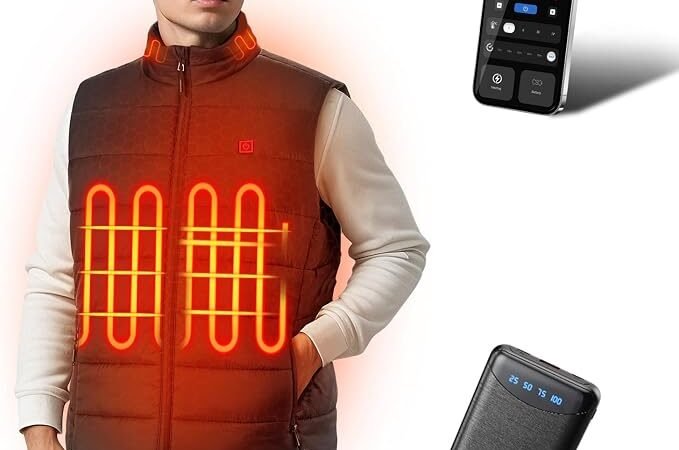
An electric heated vest is designed to address part of that problem by adding controlled warmth through integrated heating elements. The Heated Vest for Men with APP Control is a lightweight electric heated vest designed for winter activities and powered by a 12V battery pack. Its app-based controls provide a way to adjust the heating function from a compatible smartphone rather than relying entirely on physical controls.
The concept can be useful for cycling because a vest concentrates warmth around the body’s core while leaving the arms relatively unrestricted. It can also be worn for other outdoor activities where a conventional insulated layer may not provide enough adjustable warmth.
However, heated clothing has its own considerations. Battery management, clothing layers, weather conditions, fit, washing instructions, charging practices, and electrical safety all matter. A heated vest should also be considered an additional clothing layer rather than a replacement for appropriate winter protection.
This guide explains how an app-controlled heated vest works, what its main features mean in everyday use, how it can fit into a winter clothing system, and what to consider before using one for cycling or other outdoor activities.
What Is an App-Controlled Heated Vest?
A heated vest is an electrically powered garment containing heating elements designed to generate warmth when connected to a compatible battery.
Unlike a conventional vest, which relies entirely on insulation and body heat, an electric heated vest actively produces additional heat.
The model discussed here is designed for men and includes:
- Integrated heating functionality
- Smartphone app control
- A lightweight vest design
- A 12V battery pack
- A design intended for cold-weather outdoor activities
- Suitability for activities such as winter cycling
The main idea is not necessarily to make the vest the only layer someone wears outdoors. Instead, it can be incorporated into a layered clothing system.
For example, a cyclist might wear a moisture-managing base layer, the heated vest, and a wind-resistant outer shell. The exact combination depends on the temperature, wind, activity level, and personal comfort.
Key Features of the Heated Vest
1. App-Based Heating Control
One of the distinguishing features of this heated vest is smartphone-based control.
Instead of relying solely on a physical button, users can use a compatible app to manage the heating function.
This can be convenient during outdoor activities because temperature needs can change quickly. A cyclist may feel cold before beginning a ride but become warmer after several minutes of physical activity.
Being able to adjust the heating level can help avoid treating the garment as an all-or-nothing system.
The exact app functions can depend on the manufacturer’s software and smartphone compatibility, so users should review the current setup instructions before relying on app control.
2. 12V Battery Pack
The vest is powered by a 12V battery pack.
A dedicated battery allows the heating elements to operate without connecting the garment directly to a wall outlet. That makes the vest practical for outdoor use where access to electricity is limited.
Battery-powered clothing does, however, require more planning than ordinary clothing.
Before heading out, users should consider:
- Whether the battery is sufficiently charged
- Expected duration of the activity
- Outdoor temperature
- Heating level
- Whether a backup power source is available
- Proper battery storage and charging practices
Battery performance can vary with temperature and usage. Cold weather itself can affect battery performance, so actual operating time may differ from theoretical or manufacturer-stated figures.
3. Lightweight Design
A heated vest is generally designed to provide core warmth without the bulk of a full heated jacket.
This can be particularly relevant to cyclists.
Cycling requires continuous movement of the shoulders and arms, and bulky clothing can interfere with riding posture or make layering difficult.
A vest leaves the arms uncovered, allowing the user to combine it with different shirts, sweaters, cycling jerseys, or jackets.
The lightweight design can also make the garment easier to incorporate into an existing winter wardrobe.
4. Integrated Heating Elements
The central function of the garment is its built-in heating system.
Heating elements are positioned within the vest to provide warmth to selected areas of the body.
Rather than depending exclusively on thick insulation, the vest uses electrical energy to generate heat.
This can be useful when a person wants additional warmth without adding another very thick layer.
The experience of warmth will vary from person to person. Factors such as the fit of the vest, the clothing worn over it, outdoor temperature, wind, and the selected heating level all influence how much warmth the wearer perceives.
5. Core-Focused Warmth
The vest format focuses on the torso rather than the entire body.
This makes sense for many outdoor activities because keeping the core adequately insulated can complement other layers used for the arms, hands, neck, and legs.
For cyclists, this approach can be particularly practical.
The arms can remain relatively unrestricted while a jacket or other outer layer provides additional protection from wind.
It is still important to remember that a heated vest does not automatically protect every exposed area. Gloves, socks, headwear, and appropriate outerwear may remain necessary in cold conditions.
How a Heated Vest Can Be Used for Winter Cycling
Before the Ride
Preparation is particularly important with battery-powered clothing.
Before leaving home, the user can:
- Charge the battery according to the manufacturer’s instructions.
- Make sure the battery connection is secure.
- Check that the vest and wiring appear undamaged.
- Confirm that the smartphone app is installed and configured if app control will be used.
- Select appropriate clothing layers.
- Check the weather and expected temperature.
- Make sure the outer layer can comfortably accommodate the vest.
This preparation helps reduce the need to troubleshoot electronic equipment in cold outdoor conditions.
During the Start of a Ride
The beginning of a winter ride can be colder than the middle portion.
When cycling, the body generates heat through physical activity. As the ride continues, a heating setting that felt useful at the beginning may eventually become unnecessary.
An adjustable heated vest provides an opportunity to change the heat level as conditions change.
This is one reason adjustable heated clothing can be different from simply adding a thick sweater.
On Descents
Cycling downhill can create noticeably different conditions from riding uphill.
During an uphill section, physical effort may generate substantial body heat. During a descent, activity levels can temporarily decrease while wind exposure increases.
A heated vest may be useful as part of a clothing system during these transitions.
Rather than relying on one fixed heating level for an entire ride, the user can adjust the garment according to changing conditions, provided the controls can be operated safely.
During Long Rides
Long-distance winter cycling requires additional attention to battery life.
A rider should consider the planned duration before relying heavily on an electrically heated garment.
Using a higher heat setting may consume more energy than using a lower setting, and cold temperatures can influence battery performance.
For extended activities, it is sensible to treat battery capacity as one component of the overall clothing plan rather than assuming the heating system will operate indefinitely.
Using the Vest for Other Outdoor Activities
The usefulness of an electric heated vest is not limited to cycling.
Hiking
Hikers often experience changing temperatures as elevation, wind, shade, and activity levels change.
A heated vest can be incorporated into a layered hiking system where additional core warmth is occasionally useful.
However, hikers should still prioritize appropriate weather protection, especially during prolonged exposure to rain, snow, or strong wind.
Walking and Commuting
People who walk to work, school, or public transportation may spend significant periods outside during winter.
A heated vest can provide another option for managing personal comfort without requiring a very bulky coat.
Camping
Camping can involve long periods of relatively low physical activity, particularly around a campsite in the evening.
In that setting, an adjustable heated garment may be used as an additional warming layer.
Battery capacity becomes particularly important because access to electricity may be limited.
Outdoor Work
Workers who spend time outside may find heated clothing useful during cold conditions.
A vest format can allow the arms to remain mobile while providing additional warmth around the torso.
Work environments can involve specific safety requirements, however. Heated clothing should not interfere with protective equipment, visibility requirements, harnesses, or other job-specific gear.
Fishing
Cold weather fishing often involves long periods of relatively low physical movement.
A heated vest can provide additional warmth underneath an outer jacket while leaving the arms relatively unrestricted.
Winter Events
Outdoor sporting events, photography sessions, festivals, and other activities involving extended time outside can also be potential applications.
In these situations, the heating function can be used as part of a broader cold-weather clothing system.
Who May Find a Heated Vest Useful?
Winter Cyclists
Cyclists are one of the clearest groups for this type of garment.
A vest can provide core warmth while preserving relatively free arm movement, making it compatible with many cycling clothing systems.
Outdoor Commuters
People who walk or cycle to work may appreciate having adjustable warmth available during cold mornings.
Hikers and Campers
Outdoor enthusiasts who spend extended periods in changing weather conditions may use the vest as an additional layer.
People Working Outdoors
Those whose work requires time outside during colder months may consider heated clothing as one part of their winter clothing setup.
Whether it is appropriate depends on the specific workplace and safety requirements.
Anyone Who Prefers Layering
A heated vest can be useful for someone who prefers combining several lighter layers rather than wearing one very heavy garment.
The vest can sit between a base layer and outer shell, depending on the design and fit.
Important Things to Consider Before Using a Heated Vest
1. Fit Matters
The heating elements need to sit appropriately against the body for the garment to function as intended.
An excessively loose vest may reduce the effectiveness of the heating system because warmth can dissipate through large air gaps.
At the same time, clothing should not be uncomfortably tight.
When selecting a size, users should consider whether they intend to wear the vest over a thin base layer or several layers.
Always check the manufacturer’s current sizing information rather than choosing a size based solely on typical clothing measurements.
2. Battery Life Varies
Battery performance is affected by several variables.
These can include:
- Heating level
- Ambient temperature
- Battery condition
- Usage patterns
- Activity duration
- Age of the battery
A higher heating setting generally demands more energy.
For that reason, manufacturer battery-runtime figures should be treated as reference information rather than a guarantee of a specific runtime in every situation.
3. Cold Weather Affects Batteries
Lithium-based batteries and other rechargeable battery systems can behave differently in low temperatures.
A battery may not perform the same way in freezing conditions as it does indoors.
For winter activities, users should follow the manufacturer’s recommendations for charging, storage, operating temperature, and battery care.
The battery should also be protected from water exposure unless it is specifically designed to tolerate that environment.
4. Follow Washing Instructions Carefully
Heated clothing requires more attention during cleaning than ordinary clothing.
The electronic components and battery should be handled according to the manufacturer’s instructions.
Before washing, users should verify:
- Whether the battery must be removed
- Whether connectors need to be covered
- Whether machine washing is permitted
- Whether drying methods are restricted
- Whether the garment can be ironed
- Whether the heating elements have specific care requirements
Never assume that a heated garment can be washed in exactly the same way as a normal vest.
5. Inspect Wiring and Connections
Before use, check the garment for visible damage.
Look for signs such as:
- Damaged cables
- Frayed wiring
- Broken connectors
- Unusual battery swelling
- Burn marks
- Melted material
- Damaged insulation
If an electrical component appears damaged, it should not be used until the issue has been properly addressed.
6. Do Not Treat It as a Substitute for Weather Protection
Heat generation is only one part of staying comfortable outdoors.
A heated vest does not necessarily provide complete protection against:
- Rain
- Snow
- Strong wind
- Moisture
- Extreme cold
An appropriate outer layer may still be necessary.
For cycling, a wind-resistant or weather-resistant jacket can be particularly important because moving air can rapidly increase perceived cold.
7. Consider Electrical and Battery Safety
Rechargeable batteries should be charged using the recommended equipment and according to the manufacturer’s instructions.
Avoid charging a damaged battery.
Do not use visibly damaged cables or connectors.
The battery should also be stored in an appropriate location away from excessive heat, moisture, and other conditions that could damage it.
If the manufacturer provides specific warnings or operating restrictions, those instructions should take priority.
Heated Vest vs. Traditional Insulated Vest
Both types of garments can provide additional warmth, but they achieve it differently.
| Feature | Traditional Insulated Vest | Electric Heated Vest |
|---|---|---|
| Requires battery | No | Yes |
| Generates active heat | No | Yes |
| Adjustable heating | Usually no | Available on compatible models |
| Smartphone control | No | Available on this type of model |
| Maintenance | Generally simple | Includes battery and electrical care |
| Weight | Varies | Varies |
| Layering flexibility | Usually high | Usually high |
| Power-dependent warmth | No | Yes |
A traditional vest may be simpler because it does not require charging or electronic setup.
An electric vest offers another level of control because the wearer can adjust the heating function.
The choice depends on the conditions and the user’s priorities.
Heated Vest vs. Heated Jacket
A heated jacket extends the heating concept across more of the upper body, including the arms.
A vest concentrates heating around the torso.
For cycling, a vest can have a practical advantage because the arms remain available for movement and can be protected with separate layers.
A heated jacket may be more appropriate for someone who wants electrically generated warmth across the arms as well.
Neither format is automatically suitable for every situation.
Heated Clothing vs. Adding Another Layer
Adding another sweater or fleece is the simplest way to increase insulation.
However, more layers can also increase bulk.
An electric vest provides a different approach by adding active warmth without necessarily requiring another thick insulating garment.
This can be particularly useful when space, movement, or weight is important.
For example, someone preparing for a winter bike commute might prefer a thin base layer, heated vest, and outer shell rather than several thick sweaters.
Using App Control Responsibly
App-controlled clothing introduces an additional consideration: smartphone interaction while moving.
Cyclists should not attempt to operate a phone while riding if doing so creates a distraction or violates local traffic regulations.
If a heating adjustment is necessary, it is safer to make the change before starting the ride or after stopping in a safe location.
The app is a convenience feature, not something that should interfere with road awareness.
Users should also make sure Bluetooth and the relevant app permissions are configured before leaving home.
Building a Winter Cycling Layering System
A heated vest is generally most useful when it works together with other clothing.
Base Layer
The base layer helps manage moisture and sits close to the skin.
A suitable cycling base layer can help keep sweat away from the body during physical activity.
Heated Vest
The heated vest can add controllable warmth around the torso.
The fit should allow the garment to work comfortably with the layers above and below it.
Outer Shell
A cycling jacket or wind-resistant outer layer can help reduce exposure to cold air.
This is especially important during fast descents when wind exposure increases.
Hands and Head
A heated vest does not directly warm the hands, feet, or head.
Winter cycling may therefore require appropriate gloves, socks, shoes, and head protection depending on conditions.
Legs
The legs also need suitable protection for the temperature.
Cycling tights, thermal layers, or weather-resistant trousers may be appropriate depending on the ride.
Practical Maintenance Tips
Proper care can help preserve both the clothing and the electronic components.
Charge Before Important Trips
Do not wait until the morning of a long winter ride to discover that the battery is empty.
Charge it ahead of time and confirm that the system operates normally.
Store the Battery Properly
When the vest is not being used, follow the manufacturer’s recommendations for battery storage.
Avoid leaving rechargeable batteries exposed to excessive heat or moisture.
Keep Connectors Clean and Dry
Dirt or moisture around electrical connectors can cause problems.
Keep the connection points clean and follow the manufacturer’s care instructions.
Inspect the Vest Regularly
Check the garment periodically, particularly after extensive use.
Small signs of damage can become more serious if ignored.
Follow the Manufacturer’s Care Instructions
The instructions supplied with the garment should take priority over generic heated-clothing advice because different heating systems can have different requirements.
Frequently Asked Questions
What is an electric heated vest?
An electric heated vest is a garment containing integrated heating elements powered by a rechargeable battery. It generates additional warmth around parts of the torso instead of relying solely on insulation.
Does this heated vest use a battery?
Yes. The product is designed around a 12V battery pack that powers its heating system.
Can the heating level be controlled with a smartphone?
The product is designed with APP control, allowing compatible users to manage the heating function through a smartphone application.
Is it suitable for winter cycling?
The vest is designed with winter outdoor activities such as cycling in mind. Its sleeveless design can allow relatively unrestricted arm movement while providing additional warmth around the torso.
Can it be worn under a jacket?
A heated vest can generally be incorporated into a layered clothing system. Whether it fits comfortably under a particular jacket depends on the vest’s size, the jacket’s cut, and the number of layers being worn.
Does a heated vest replace a winter jacket?
Not necessarily. A heated vest primarily provides additional warmth around the torso. A suitable outer layer may still be necessary for wind, rain, snow, and other weather conditions.
How long will the battery last?
Battery runtime depends on factors such as the selected heating level, outdoor temperature, battery condition, and usage pattern. Manufacturer runtime specifications should be treated as reference values rather than guaranteed results.
Does cold weather affect the battery?
Cold temperatures can affect rechargeable battery performance. Users should follow the manufacturer’s recommendations for battery storage, charging, and operation in low temperatures.
Can the vest be washed?
Cleaning procedures depend on the garment’s design. Follow the manufacturer’s washing instructions carefully, particularly regarding battery removal, connectors, drying, and electronic components.
Can the vest be used while cycling in rain?
This depends on the vest’s specific water-resistance specifications and the manufacturer’s instructions. Users should not assume that an electrically heated garment is waterproof simply because it is designed for outdoor use.
Is app control necessary to use the vest?
The exact control system depends on the manufacturer’s design and instructions. If the product provides physical controls as well as app functionality, the app may serve as an additional control method. Users should consult the included instructions for the exact operating procedure.
Can the vest be used for hiking?
It can be incorporated into a hiking clothing system when appropriate for the conditions. Battery capacity, weather protection, fit, and safe operation should all be considered.
Is it suitable for outdoor work?
It may be useful in some outdoor work environments, but workers should make sure the garment does not interfere with required protective equipment or workplace safety procedures.
Does the vest provide medical benefits?
A heated vest should not be considered a medical device or a treatment for a medical condition. Its primary purpose is providing additional warmth.
What should be worn with a heated vest?
A practical combination may include a moisture-managing base layer, the heated vest, and an appropriate outer shell. Additional protection for the hands, head, legs, and feet may also be necessary in cold conditions.
Is a heated vest more flexible than a heated jacket?
That depends on the intended use. A vest leaves the arms uncovered, which can be useful for cycling and other activities requiring arm mobility. A heated jacket provides coverage and heating across a larger portion of the upper body.
Conclusion
An app-controlled heated vest offers a different approach to managing cold-weather comfort. Instead of relying exclusively on thicker insulation, it combines a lightweight garment with electrically generated warmth and smartphone-based control.
For winter cycling, the vest format can be particularly practical because it focuses warmth around the torso while leaving the arms relatively unrestricted. It can be combined with a base layer and an outer wind-resistant jacket to create a flexible clothing system that can adapt to changing activity levels and weather conditions.
The 12V battery pack makes the garment suitable for use away from a power outlet, while the app-control feature provides an additional way to adjust the heating system. These conveniences also introduce responsibilities, including keeping the battery charged, following charging and storage instructions, inspecting the wiring, and taking care of the garment during washing.
It is also important to maintain realistic expectations. A heated vest is not a replacement for appropriate winter clothing, weather protection, or safe outdoor practices. Heating performance and battery runtime can vary depending on temperature, clothing layers, activity level, and operating settings. For cycling in particular, the vest should complement rather than replace suitable protection against wind, rain, and other environmental conditions.
For people who spend significant time outdoors during colder months, especially cyclists, commuters, hikers, and outdoor workers, an electric heated vest can be one practical option for adding adjustable core warmth to an existing clothing system.