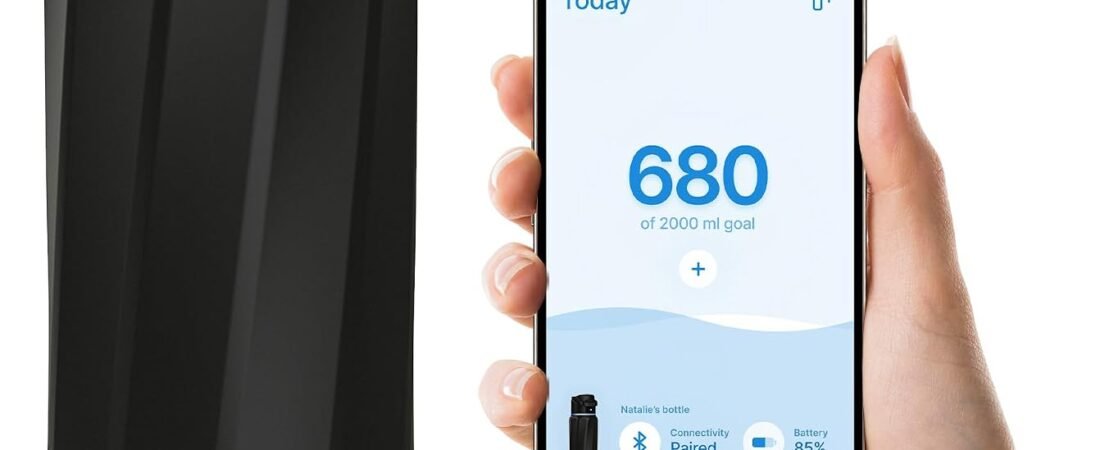
Remembering to drink water throughout a busy day sounds simple, but it can easily become an afterthought. Work, commuting, exercise, travel, household responsibilities, and long periods spent in front of a computer can all make it easy to go several hours without reaching for a water bottle.
A reusable water bottle with a built-in reminder system approaches this everyday problem from a different angle. Instead of simply holding water, a smart hydration bottle can provide prompts that encourage users to check in with their drinking routine throughout the day.
The WaterH BOOST Smart Water Bottle Tracker is designed around this concept. The product is listed as a 32-ounce bottle and is described as providing reminders to drink water. Its design also includes an insulated stainless-steel construction and a BPA-free configuration, according to the product information.
This combination makes the bottle relevant to people who want a reusable drinking container while also being interested in hydration tracking or reminders.
However, a reminder bottle should be understood as a behavioral aid rather than a substitute for individualized health advice. Water requirements differ from person to person and can be influenced by factors such as activity, environment, diet, and medical circumstances.
This guide explores the WaterH BOOST concept in detail, including its main features, practical uses, potential benefits, limitations, comparisons with other types of reusable bottles, and factors to consider before choosing a hydration-tracking bottle.
What Is a Smart Water Bottle Tracker?
A smart water bottle tracker is a reusable bottle designed to help users pay more attention to their drinking routine.
Traditional water bottles focus mainly on storage and portability. A smart or reminder-oriented bottle adds another layer: prompts or tracking features intended to encourage regular interaction with the bottle.
The WaterH BOOST is listed with a 32-ounce capacity.
That means the bottle can hold a substantial amount of water while remaining a portable container for everyday activities.
The reminder function is particularly relevant to people who tend to forget about drinking water during busy periods.
Rather than relying entirely on memory, a reminder system can create an external cue.
This concept is similar to using an alarm, calendar notification, or other routine prompt. The purpose is not to dictate exactly how much water someone should consume, but to make drinking water a more visible part of the day.
Key Features of the WaterH BOOST Smart Water Bottle
32-Ounce Capacity
The bottle has a listed capacity of 32 ounces.
For many users, this provides a useful balance between carrying enough water for part of the day and avoiding the size associated with very large hydration containers.
A 32-ounce bottle can be suitable for:
- Workdays
- School
- Commuting
- Walks
- Gym sessions
- Outdoor activities
- Travel
- Desk use
- General daily hydration routines
The actual usefulness of the capacity depends on how often the user can refill the bottle.
Someone working near a water dispenser may have no problem with a smaller bottle, while someone spending several hours away from a convenient water source may prefer a larger capacity.
Drinking Reminders
The defining feature of the WaterH BOOST is its reminder function.
Reminders can help create a behavioral cue by encouraging the user to take a moment and consider whether they have had water recently.
This can be useful during activities where people become absorbed in what they are doing.
For example, someone working at a computer may become focused on a project and lose track of time. A reminder can interrupt that pattern and bring attention back to hydration.
It is important to distinguish reminders from personalized medical recommendations.
A reminder system does not know every individual’s health circumstances, dietary intake, activity level, or fluid requirements. Users should follow guidance from qualified healthcare professionals when they have specific hydration needs or restrictions.
Insulated Stainless-Steel Construction
The product is described as using insulated stainless steel.
Stainless steel is widely used in reusable bottles because it provides a durable alternative to many disposable containers.
Insulation is designed to help reduce the rate at which the temperature of the bottle’s contents changes.
The practical benefit is that cold beverages may remain cooler for longer than they would in a non-insulated container under similar conditions.
Actual temperature retention varies according to factors such as starting temperature, ambient conditions, how frequently the bottle is opened, and the specific construction of the bottle.
Insulation should therefore be viewed as a temperature-management feature rather than a guarantee that a beverage will remain at a particular temperature for a fixed period.
BPA-Free Design
The product information identifies the bottle as BPA-free.
BPA, or bisphenol A, is a chemical that has historically been used in the production of certain plastics and resins.
Consumers looking for reusable drinkware often pay attention to BPA-related labeling.
The BPA-free designation applies to the materials identified by the manufacturer. Users should still follow the manufacturer’s instructions regarding appropriate beverages, cleaning, temperature limits, and care.
Reusable Bottle Format
A reusable bottle is designed to be used repeatedly rather than discarded after a single beverage.
Regular reuse can make it a practical part of an everyday routine.
The environmental impact of any reusable bottle depends on many factors, including manufacturing, transportation, cleaning, lifespan, and how frequently it replaces disposable containers.
The key practical benefit is that a reusable bottle can provide a consistent personal water container that users can refill throughout the day.
How the WaterH BOOST Can Be Used
At a Work Desk
One of the most straightforward uses is at work.
People who spend long periods at a desk may become focused on emails, meetings, writing, design work, programming, or other tasks.
Keeping a water bottle within sight can make drinking water easier to remember.
A reminder feature adds another cue.
Rather than waiting until the end of the workday to realize that the bottle has barely been touched, users can use the prompts as a reason to pause and drink.
The bottle’s 32-ounce capacity also means fewer refills may be necessary than with a smaller personal bottle.
During Exercise
A reusable bottle can be useful before, during, and after physical activity.
During exercise, fluid needs can vary considerably depending on the activity, duration, temperature, humidity, and individual circumstances.
The reminder function can provide a general cue to drink, but it should not be treated as an exercise-specific hydration prescription.
For longer or more intense activities, individual hydration strategies may need to account for sweat loss and other factors.
During Commutes
Commuting can involve long periods away from home.
A refillable bottle provides a convenient way to carry water while traveling by car, train, bus, bicycle, or on foot.
The reminder feature may be particularly useful when the commute becomes part of a busy schedule.
While Traveling
Travel routines can disrupt normal habits.
Different schedules, long journeys, unfamiliar environments, and changes in activity can make it easy to forget routine behaviors.
Carrying a reusable bottle can make water more accessible when appropriate.
Before air travel, users should also consider airport security requirements and whether the bottle needs to be empty when passing through security.
During Outdoor Activities
Walking, hiking, sightseeing, gardening, and other outdoor activities can increase the importance of carrying adequate fluids.
A 32-ounce bottle can provide a portable supply for shorter activities.
For longer outings, users should plan their water supply based on the duration and environment rather than assuming one bottle will always be sufficient.
Hot weather can change hydration needs significantly.
At School
Students may spend several hours away from home and have limited opportunities to refill a bottle.
A reusable bottle can provide a convenient source of drinking water.
A reminder feature can also encourage students to make drinking water part of their routine.
School policies regarding reusable bottles should be considered before bringing one into a particular environment.
At Home
The bottle does not need to leave the house to be useful.
Some people simply forget to drink water while working, gaming, reading, cooking, or watching television.
Keeping the bottle nearby provides both a visual reminder and a physical supply of water.
Building a More Consistent Drinking Routine
A reminder bottle can be most useful when it becomes part of an established routine.
Instead of treating each reminder as an isolated event, users can connect drinking water with existing daily activities.
For example:
- Drink water after waking up.
- Keep the bottle beside your workspace.
- Take water with you when leaving home.
- Drink during scheduled work breaks.
- Refill the bottle at predictable times.
- Keep it visible during extended desk sessions.
- Carry it during appropriate outdoor activities.
These habits create multiple cues throughout the day.
The bottle itself becomes part of the environment rather than something that is remembered only occasionally.
Why Reminders Can Be Useful
Human behavior often depends on cues.
People remember appointments because calendars provide reminders. They remember meetings because notifications appear. They remember tasks because checklists bring them back into focus.
Hydration can work in a similar way.
The problem is not necessarily that someone does not want to drink water. They may simply become distracted.
A reminder can serve as a small interruption.
The effectiveness of any reminder system depends on whether the user responds to it. A notification that is repeatedly ignored will eventually lose its practical value.
For that reason, users may benefit from treating reminders as prompts rather than obligations.
Who May Find This Type of Water Bottle Useful?
Busy Professionals
People with demanding work schedules may appreciate a reminder-oriented bottle because it can bring hydration back into focus during busy periods.
Students
Students can spend long periods studying or attending classes.
A reusable bottle with reminders may provide a convenient way to incorporate drinking water into the school day, subject to school policies.
Fitness Enthusiasts
People who exercise regularly may appreciate having a reusable bottle readily available.
The reminder feature can act as a general cue, while actual hydration needs should be adjusted to the activity and personal circumstances.
People Who Frequently Forget to Drink Water
This may be the most natural audience for a reminder bottle.
If someone already carries a water bottle but regularly realizes that several hours have passed without drinking, reminders can address the behavioral side of the problem.
Travelers and Commuters
People who spend considerable time away from home may find a reusable 32-ounce bottle convenient for carrying water during the day.
People Interested in Reusable Drinkware
The stainless-steel construction and reusable format may appeal to consumers who prefer reusable bottles over disposable water containers.
Important Things to Consider
A Reminder Is Not a Personalized Hydration Plan
This is one of the most important distinctions.
A reminder bottle can encourage someone to drink, but it does not necessarily know how much fluid that individual requires.
Fluid needs vary.
Factors can include:
- Physical activity
- Weather
- Temperature
- Humidity
- Diet
- Body size
- Age
- Pregnancy
- Illness
- Medications
- Medical conditions
People with conditions that affect fluid intake or who have been given specific hydration instructions should follow their healthcare professional’s guidance rather than relying on a general bottle reminder.
Do Not Assume More Water Is Always Better
Hydration is important, but consuming excessive amounts of water can also be harmful under certain circumstances.
The goal of a reminder system should be to encourage a reasonable drinking routine rather than encouraging users to consume water continuously regardless of their needs.
Listen to normal thirst signals and follow individualized medical advice when applicable.
Cleaning Requirements
Reusable bottles need regular cleaning.
Even when a bottle is used only for water, moisture and residue can accumulate in the bottle, lid, mouthpiece, or other components.
Cleaning frequency depends on usage and manufacturer guidance.
Users should pay particular attention to any areas that are difficult to reach.
A bottle that is easy to fill but difficult to clean can become inconvenient over time.
Temperature and Beverage Compatibility
Stainless-steel insulated bottles are commonly used for cold or room-temperature beverages, but the exact beverage compatibility depends on the manufacturer’s instructions.
Users should verify whether the bottle is intended for hot beverages and whether there are any restrictions involving carbonated drinks, acidic beverages, or other liquids.
Do not assume that stainless steel automatically makes every beverage appropriate.
Size and Portability
A 32-ounce bottle contains a substantial amount of water.
When full, the water alone adds roughly two pounds to the carried weight.
The bottle itself adds additional weight.
This may be perfectly manageable for a desk, gym bag, or vehicle, but it may feel different when carried during a long walk or hike.
Portability is therefore about more than bottle dimensions.
Users should consider the combined weight of the bottle and its contents.
Refill Access
A bottle’s capacity only matters in relation to access to water.
If a user has frequent access to a water dispenser, sink, or refill station, a smaller bottle may be sufficient.
If refilling is difficult, a larger capacity may be more convenient.
The right choice depends on the user’s routine.
Reminder Frequency
Different people respond differently to reminders.
Some may find frequent prompts useful, while others may quickly ignore them.
The practical value depends partly on whether the reminder system can fit naturally into the user’s schedule.
If reminders are adjustable, users can choose a pattern that is less disruptive and more realistic for their routine.
Smart Reminder Bottle vs. Traditional Water Bottle
A traditional reusable bottle focuses mainly on carrying water.
It may be lightweight, simple, and easy to use.
A smart reminder bottle adds technology intended to influence behavior.
| Feature | Traditional Reusable Bottle | Reminder-Oriented Smart Bottle |
|---|---|---|
| Holds water | Yes | Yes |
| Reusable | Usually | Yes |
| Drinking reminders | Usually no | Designed around reminders |
| Temperature insulation | Depends on model | Depends on model |
| Tracking features | Limited | May include additional tracking features |
| Simplicity | Generally high | More technology involved |
| Charging or electronics | Usually no | Depends on design |
Someone who already drinks water regularly may not need reminder functionality.
For someone who frequently forgets, the additional feature can be more relevant.
Insulated Stainless Steel vs. Plastic Bottles
Plastic bottles are widely used because they can be lightweight and relatively inexpensive.
Insulated stainless-steel bottles offer a different combination of properties.
Stainless steel can provide a durable reusable container, while insulation can help slow temperature changes.
Plastic bottles may be more convenient when low weight is the main priority.
The choice depends on how the bottle will be used.
For example, someone carrying a bottle on a long hike may prioritize weight, while someone keeping a bottle at a desk may care more about insulation and construction.
32-Ounce Bottle vs. Smaller Bottles
A smaller bottle can be easier to carry.
However, it requires more frequent refilling.
A 32-ounce bottle provides more capacity but adds more weight when full.
Neither option is universally preferable.
The right capacity depends on access to drinking water and the user’s routine.
For a person working from home beside a kitchen, a smaller bottle may be perfectly practical.
For someone spending several hours away from refill points, a larger bottle can reduce the need for frequent stops.
Smart Bottle vs. Smartphone Reminder
It is also possible to create hydration reminders using a smartphone.
A phone already has alarms, notifications, calendars, and health-related applications.
A dedicated reminder bottle offers a different experience because the reminder and the water container are physically connected.
This can reduce the number of separate devices involved in the routine.
However, smartphone reminders may provide greater flexibility and customization depending on the user’s preferred apps.
The choice is largely about convenience and habit.
Practical Tips for Using the Bottle
Keep It Within Sight
A bottle that is hidden inside a bag is easier to forget.
Keeping it visible on a desk or countertop can reinforce the reminder system.
Refill at Predictable Times
Instead of waiting until the bottle is completely empty, establish natural refill points.
For example, refill before leaving work or before beginning an afternoon activity.
Clean It Regularly
Follow the manufacturer’s cleaning recommendations.
Do not allow moisture or residue to remain inside the bottle for unnecessarily long periods.
Keep the Lid Clean
The lid and drinking area can receive frequent contact with hands and mouth.
These areas deserve particular attention during cleaning.
Inspect the Bottle Periodically
Check the lid, seals, charging or electronic components if applicable, and exterior for signs of wear.
Replace damaged components according to the manufacturer’s recommendations.
Do Not Ignore Your Environment
A bottle reminder is only one part of hydration awareness.
Outdoor activity, hot weather, and exercise can change fluid requirements.
Plan accordingly.
Using the Bottle During Exercise
Hydration during exercise requires some additional thought.
For short, low-intensity activity in moderate conditions, carrying a bottle may simply provide convenient access to water.
For prolonged or intense activity, particularly in hot or humid conditions, fluid and electrolyte losses can become more significant.
A generic reminder should not replace an individualized exercise hydration strategy.
Athletes participating in endurance activities may have different needs from someone taking a short walk.
The bottle can be used as a container and reminder tool, but the actual hydration plan should reflect the activity.
Using the Bottle at Work
The workplace may be one of the strongest use cases for a reminder-oriented bottle.
Many desk-based tasks involve long periods of uninterrupted concentration.
A bottle positioned beside the keyboard or monitor remains visible.
When the reminder activates, the user has an immediate supply of water available.
This reduces one common barrier: having to leave the workspace to find something to drink.
For office environments, the bottle can also help create a consistent refill routine.
Using the Bottle While Traveling
Travel introduces several practical considerations.
First, the bottle should be emptied when required by transportation security rules.
Second, access to drinking water may vary considerably between locations.
Third, the bottle should be cleaned appropriately after long periods of travel.
The 32-ounce capacity can be convenient when refill opportunities are predictable, but users should not assume that every location will allow a full bottle to be carried through security or into a particular venue.
Frequently Asked Questions
What is the capacity of the WaterH BOOST bottle?
The WaterH BOOST Smart Water Bottle Tracker is listed with a 32-ounce capacity.
What is the purpose of the reminder feature?
The reminder feature is intended to encourage users to remember to drink water throughout the day. It acts as a behavioral cue rather than a personalized medical hydration recommendation.
Is the bottle insulated?
The product is described as an insulated stainless-steel water bottle. Insulation is designed to help slow changes in beverage temperature, although actual performance depends on usage and environmental conditions.
Is the bottle made from stainless steel?
The product information identifies stainless steel as part of the bottle’s construction.
Is it BPA-free?
The product listing describes the bottle as BPA-free.
Is a 32-ounce bottle large?
A 32-ounce capacity is larger than many compact personal bottles but smaller than some very large hydration containers. Whether it feels large depends on the user’s carrying and drinking habits.
How much does 32 ounces of water weigh?
Water weighs approximately 2 pounds at 32 fluid ounces, although the exact mass can vary slightly with temperature and measurement conditions. The bottle itself adds additional weight.
Can the bottle be used for exercise?
It can be carried during exercise, but appropriate hydration depends on the type and duration of activity, environmental conditions, and individual needs.
Does the reminder tell me how much water I need?
A reminder system should not be interpreted as a personalized calculation of an individual’s fluid requirements. People with specific hydration needs should follow appropriate professional guidance.
Can children use a reminder water bottle?
The suitability depends on the child’s age, ability to safely handle the bottle, and any relevant household or school considerations. Children with medical conditions affecting fluid intake should follow their healthcare provider’s instructions.
Can the bottle be used for hot beverages?
Do not assume that an insulated stainless-steel bottle is automatically suitable for hot liquids. Check the manufacturer’s current instructions regarding temperature limits and beverage compatibility.
How should a reusable bottle be cleaned?
Follow the manufacturer’s care instructions and clean the bottle and its drinking components regularly. Pay attention to the lid, seals, mouthpiece, and other areas where moisture or residue can accumulate.
Can I use it with beverages other than water?
The appropriate beverages depend on the manufacturer’s specifications. Users should check the current product instructions before using acidic, carbonated, hot, or flavored beverages.
Is a smart bottle better than a normal water bottle?
Not necessarily. A traditional bottle may be sufficient for someone who already has a consistent drinking routine. A reminder-oriented bottle may be more relevant to someone who frequently forgets to drink.
Can I rely entirely on bottle reminders for hydration?
No. Reminders are simply a tool for encouraging a routine. They should not override thirst, environmental conditions, exercise needs, or individualized medical guidance.
Is stainless steel durable?
Stainless steel is widely used in reusable drinkware and can provide a durable material for everyday use. Actual longevity depends on construction, maintenance, handling, and frequency of use.
Choosing the Right Water Bottle for Your Routine
There is no single water bottle format that works for every lifestyle.
A commuter may prioritize portability.
A desk worker may value a large capacity and reminders.
A runner may prioritize low weight.
A traveler may care about leak resistance and cleaning.
A person who already drinks water consistently may not need smart features at all.
The important thing is to identify the actual problem you want the bottle to solve.
If the problem is forgetting to drink, a reminder feature can be relevant.
If the problem is keeping water cold, insulation may be more important.
If the problem is carrying water over long distances, capacity and weight become more significant.
If the problem is cleaning, a simple design with easily accessible components may matter most.
Thinking about these factors helps prevent choosing a bottle based solely on a feature list.
Creating a Sustainable Hydration Habit
A hydration bottle works best when it becomes part of an established routine.
The objective is not to become dependent on constant notifications.
Instead, reminders can gradually reinforce a habit.
For example, someone might initially rely heavily on reminders. Over time, drinking water can become associated with regular activities such as work breaks, meals, commuting, or exercise.
Eventually, the bottle may simply become part of the person’s normal daily routine.
This is one reason behavioral tools are most useful when they fit naturally into existing habits.
Maintenance and Long-Term Use
Reusable products are intended to remain in use for an extended period, making maintenance important.
The bottle should be cleaned regularly.
Seals and lids should be inspected for wear.
The exterior should be kept free from unnecessary buildup.
If the bottle includes electronic or reminder components, users should follow the manufacturer’s instructions regarding charging, moisture exposure, storage, and cleaning.
Avoid submerging electronic components unless the manufacturer specifically states that they are designed for that type of exposure.
If a component becomes damaged, follow the manufacturer’s replacement or support guidance rather than attempting an unauthorized modification.
Final Thoughts
The WaterH BOOST Smart Water Bottle Tracker combines the basic function of a reusable water bottle with features intended to encourage more consistent drinking throughout the day.
Its listed 32-ounce capacity provides a practical amount of water for many everyday situations, while insulated stainless-steel construction offers a different combination of durability and temperature management than many lightweight plastic bottles.
The reminder feature is the defining element.
For someone who frequently becomes distracted and forgets to drink water, an external prompt can be a useful behavioral tool. Keeping the bottle nearby and responding to reminders can make hydration more visible during work, study, travel, exercise, and other daily activities.
At the same time, the bottle should not be viewed as a device that determines an individual’s ideal water intake. Hydration requirements vary, and environmental conditions, activity levels, diet, medications, and medical circumstances can all affect fluid needs. Anyone with specific medical guidance should prioritize that advice over generic reminder settings.
The bottle’s size is another consideration. Thirty-two ounces provides useful capacity but also means that the water itself weighs around two pounds when the bottle is full. That may be convenient at a desk or in a vehicle but less attractive for activities where minimizing carried weight is important.
Cleaning and maintenance are also part of the ownership experience. Reusable bottles should be cleaned regularly, with particular attention to the lid, mouthpiece, seals, and any areas where moisture can remain.
Ultimately, the value of a reminder-oriented water bottle comes from how well it fits the user’s routine. A person who already drinks water consistently may have little need for additional prompts. Someone who regularly gets caught up in work, study, commuting, or other activities may appreciate having a physical bottle combined with reminders.
The WaterH BOOST therefore represents a practical category of reusable drinkware focused not only on carrying water, but also on making hydration a more visible part of everyday life.
Before choosing this type of bottle, check the manufacturer’s latest specifications and care instructions for details regarding reminder functionality, charging or electronic components, beverage compatibility, cleaning, insulation, and other product-specific requirements.
If a 32-ounce insulated bottle with a reminder-oriented design fits your daily routine,